Posts

Showing posts with the label History

The Forbidden Shore: A Documentary about Cuban Music (Traducido al español)

Image
Written by Sophia Bass, translated below by Izzy Valdés. Cuba is known for its diverse music scene that combines European, African, and  Caribbean sounds. While you may be familiar with Cuban band, Buena Vista Social Club, the majority of the international world has not been exposed to Cuba's wide array of musicians and artists that play regularly on the streets of Old Havana.  The documentary,  The Forbidden Shore ,  showcases over 40 performances and interviews by Cuba's top artists. This film highlights how little the global world knows about Cuba and Latin America. Director Ron Chapman wanted the international community to know about the diversity of Cuban music. Chapman explains that he was in awe when he traveled to Cuba for the first time because he was unaware of the musical diversity on the Caribbean island. Artistic Director, Diana Vargas states, "We wanted to show a snapshot of the work that is being produced in Cuba today." As many people wan...

Muraleando: A Community Project in Havana, Cuba (Traducido al español)

Image
Written by Sophia Bass, translated below by Izzy Valdés The first time I traveled to Havana, I immediately noticed a variety of artistic expression throughout the city. From local art markets and galleries to murals, I wanted to learn the story behind Cuba's innovative art scene. I quickly learned of the Muraleando Art Project founded by Manuel Diaz Baldrich and Ernesto Quirch Paz in 2003. Founder of Soltura Cuba Travel, Ian Sergeant, assisted in funding the creation of the project through the not-for-profit organization, Cuba AyUUda.  Situated on the outskirts of Havana, the project has transformed an area of rubble and destruction into a thriving art collective. The goal of Muraleando is to bring children off the streets of Havana and inspire them to contribute to a community project. In a country where nothing is disposable and everything is useful from telephone wires, iron, to old typewriters, artists in Cuba sought an opportunity to utilize these materials and create s...

Walking the Art Market in Havana

Image
Written by Sophia Bass  My first trip to Old Havana I was pleasantly surprised by the amount of art vendors, musicians, and colorful fruit stands that colored the streets. I could have spent days wandering around the Cathedral Square that is a central destinations for travelers around the world. After a long day of walking in the heat, I stumbled across the San José Artisans' Market.  Contained in a large warehouse to protect travelers and locals from the sun, arts and crafts vendors set up stands from dawn to dusk to sell paintings, ceramics, clothing, instruments, cigars, and crafts. I can recall men hustling to sell cigars and handmade wooden boxes. My partner bought a beautiful carved wooden box with the Cuban flag carved on the front and two cigars for my father. As my eyes wandered to the paintings and ceramics, I purchased two brightly colored plates painted with blues, greens, oranges, and yellows to decorate my home. As Old Havana is blend of Afro-Spanish c...

My Favorite Cuban Instrument

Image
Written by Sophia Bass When walking through the streets of Old Havana, you may notice a variety of instruments being played by Cuban street musicians. Guitar, bongos, upright bass, and the clave are just a few of the many instruments utilized by Cuban musicians. As a songwriter and musician, I was most familiar with the clave as I grew up playing the Cuban instrument in my home. Claves are one of the most useful instruments for composition in Cuban music. They are comprised of two wooden sticks that are cylindrical in shape. You play the clave by striking them against each other. Originating in the 16th century, the clave was invented by musician Fernando Ortiz. I learned that the clave has historical significance as it was first instrument used to accompany the songs of Hispanic and African dock workers in Havana. When I was in Havana in 2017, a local musician in Vedado explained that the clave is used to track time signatures, stabilize harmony, and to perform precise patterns....

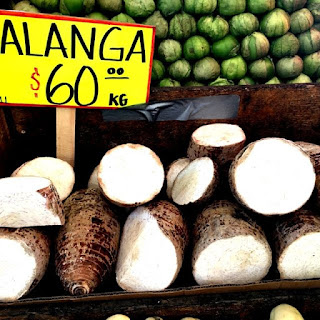
The Story Behind Malanga

Image
Written by Sophia Bass One of the first foods I tried in Old Havana, Cuba was a fried starchy appetizer dipped in honey. I had no idea what it was, but I learned it was called malanga. Popular throughout different regions in Cuba, malanga has an unique flavor unlike anything I've ever tried in the United States. It is often confused with taro as it has a similar taste and texture. When shredded and deep fried, it makes a delicious dish. While traveling throughout Cuba, I learned that malanga is native to the tropical central and northern parts of South America. First discovered by Spanish explorers, it was first domesticated in Central America and brought to the Dominican Republic, Haiti and Cuba and other regions of West Africa. Malanga can grow in environments that are moist such as flooded areas or marsh areas that receive a high amount of annual rainfall. In Cuba, malanga is available in food markets and some produce shops. I noticed that it was a popular item in touris...