Posts

Showing posts with the label Travel

Cuba's Education System (traducido al español)

Image
Written by Sophia Bass, translated below by Izzy Valdés  When I first arrived in Cuba I was intrigued when I learned that public education is one of Cuba's top priorities. Ever since 1959 when President Batista was in political power, he was determined to eliminate illiteracy throughout Cuba. According to the World Bank, Cuba reported 12.84% of GDP in 2010 for public spending on education. Today, Cuba has one of the highest literacy rates in the world. As I was perusing the streets of Old Havana, I met young men and women between the ages of twenty-five and thirty waiting tables or playing music on street corners. One man named José who served me coffee said, "Would you believe me if I told you I was a dentist?" I replied, "Yes, but why are you serving me coffee then?" José stated, "I make more money waiting tables than I do working as a dentist in Cuba." José explained that the joke about Cuba is that there is a doctor or lawyer on ever...

Elections in Cuba: How it Works (traducido al español)

Image
Written by Ian Sergeant and Sophia Bass, translated below by Izzy Valdés. Cuba’s presidential elections having just passed, we thought we would help alleviate any confusion that there may be regarding Cuba’s electoral process. In 2007, Raul Castro assumed power when his brother Fidel Castro fell ill. He was officially elected president in February 2008. After his reelection in 2013, Raul promised that he would only hold power for this second 5-year term, and then step down as president. This was extended by a couple of months after Hurricane Irma, in order to ensure the stability of the republic. On April 19th, 2018, Cuba’s National Assembly elected Miguel Diaz-Canel president of Cuba. The National Assembly of People’s Power is Cuba’s Parliament and is made up of 605 members, chosen on a local level through democratic elections. The last election was March 2018. They are the only body in the Republic invested with constituent and legislative authority. This means that when it is ...

A Lesser Known City in Cuba: Camagüey ( traducido al español)

Image
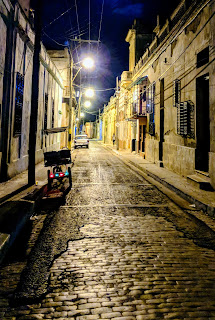
Written by Sophia Bass and Izzy Valdés. Translated below by Izzy Valdés. The majority of international travelers may not know about the lesser traveled destinations in Cuba. There is a special village right in the very heart of this island that is worth discovering. Camagüey, formerly called “Santa Maria Del Puerto del Principe” is one of the first seven villages founded by the Spaniards in Cuba and also one of those places you should not miss when traveling to this Caribbean Island. Founded in 1514 in the northern coast of the territory, the town became an urban center for the sugar and cattle industry. Known for its beautiful colonial architecture, you can find endless labyrinthian alleys, numerous squares, and ornate cathedrals, as the city is known for its Catholic history. Exploring a city like Camagüey is quite a challenge. When it seems you have reached the end of a street, it merges with the beginning of another, totally unexpected - right before your eyes you have ...

Muraleando: A Community Project in Havana, Cuba (Traducido al español)

Image
Written by Sophia Bass, translated below by Izzy Valdés The first time I traveled to Havana, I immediately noticed a variety of artistic expression throughout the city. From local art markets and galleries to murals, I wanted to learn the story behind Cuba's innovative art scene. I quickly learned of the Muraleando Art Project founded by Manuel Diaz Baldrich and Ernesto Quirch Paz in 2003. Founder of Soltura Cuba Travel, Ian Sergeant, assisted in funding the creation of the project through the not-for-profit organization, Cuba AyUUda.  Situated on the outskirts of Havana, the project has transformed an area of rubble and destruction into a thriving art collective. The goal of Muraleando is to bring children off the streets of Havana and inspire them to contribute to a community project. In a country where nothing is disposable and everything is useful from telephone wires, iron, to old typewriters, artists in Cuba sought an opportunity to utilize these materials and create s...

Vedado--A Less Traveled Neighborhood in Havana (traducido al español)

Image
Written by Sophia Bass, translated below by Izzy Valdés. My first trip to Havana I stayed in Vedado, a modern part of the city that was developed in the first half of the 20th century. Vedado is interesting because it is known as a more affluent part of the city home to businesses and elegant neighborhoods. While staying in Vedado with a family, our homestay mother, Lucy, explained that Vedado was transformed by American investors and individuals benefiting from Cuba's sugar trade. My favorite night in Vedado was when my partner and I decided to wander the streets and take in views of mansions, Cuban architecture, and government-sponsored cultural centers. One of the most famous landmarks in Vedado is the Hotel Riviera which was built in 1957. You can feel the aftermath of the Cuban Revolution simply by walking around this area of Havana. Vedado's rich history is not the only reason to wander the streets. This residential neighborhood is filled with public parks where...

Walking the Art Market in Havana

Image
Written by Sophia Bass  My first trip to Old Havana I was pleasantly surprised by the amount of art vendors, musicians, and colorful fruit stands that colored the streets. I could have spent days wandering around the Cathedral Square that is a central destinations for travelers around the world. After a long day of walking in the heat, I stumbled across the San José Artisans' Market.  Contained in a large warehouse to protect travelers and locals from the sun, arts and crafts vendors set up stands from dawn to dusk to sell paintings, ceramics, clothing, instruments, cigars, and crafts. I can recall men hustling to sell cigars and handmade wooden boxes. My partner bought a beautiful carved wooden box with the Cuban flag carved on the front and two cigars for my father. As my eyes wandered to the paintings and ceramics, I purchased two brightly colored plates painted with blues, greens, oranges, and yellows to decorate my home. As Old Havana is blend of Afro-Spanish c...

Cuba's Car Scene in 2017

Image
Me in a vintage Chevy in Old Havana  Written by Sophia Bass For decades, Cuba has been home to 1950’s American classic vintage cars. As Cuba has had restrictions on new car imports under the Castro regime, the Caribbean nation has preserved classic cars while incorporating them into their daily culture. In a country where the average Cuban makes $20 a month, a new car would not be a realistic goal for most Cubans. If you visit Cuba, you will notice a wide array of cars and colors throughout Havana, Trinidad, Santiago de Cuba, and all throughout the countryside. An estimated 60,000 pre-1959 American cars are still driving the Cuban streets. An easing of the U.S. embargo could have dramatic impacts on car-scene throughout Cuba. Journalist, Jonathon Harper, traveled to Cuba in recent years and noticed that the majority of cars in Cuba fit in about five categories. “Original American classics, non-originiae American classics, Russian cars and trucks, newer Chinese/Korean/Japanese v...

Soltura Cuba Tours Continue Unaffected Despite Trump’s Policy

To Soltura Cuba Travelers, You may have heard the news regarding Trump’s policy on Cuba. We want to assure you of what the facts are as we know them on the ground. The announcement made by the State Department should have no effect on our trip. The US media has been confusing some of the facts. For example, one media source announced that Cuba was no longer issuing tourist visas to Americans, while the truth is that the US embassy is no longer issuing visas to Cubans who wish to visit the US. This is simply because there will not be enough embassy staff to process visas for Cubans. We want to assure you that there is no negative sentiment here toward US citizens. In fact the entire security force of Cuba has been fully cooperating with the US in the investigation into the sonic incidents that damaged a few embassy workers. Several highly regarded US scientists have concluded that it would have been impossible to have intentionally done this. It was likely faulty covert listening device...

Small-Scale Cuban Farms Meet the Global Market

Image
Written by Sophia Bass Cuba's coffee industry is reviving. Guantanamo province has historically been known for its coffee plantations and mountain ranges, producing some of the highest quality arabica beans in the world. While 90% of Cuba's coffee comes from Eastern Cuba, 8% comes from the central provinces, and 2% from the Western province of Pinar del Rio. Due to deforestation, Cuban coffee no longer grows in the surrounding areas around Havana. In recent months, Cuba has partnered with international marketing companies and foreign investors to increase coffee exports. Cuban Mountain Coffee (CMC), is investing in the revival of Guantanamo's coffee crop and wants to market the coffee beans on the international market. In addition, CMC is partnering with Nespresso to supply the company with green coffee beans. Nespresso, a division of Swiss Food in Nestle, instigated excitement across the United States when it began exporting the first Cuban coffee to the U.S. market in h...

Cuba's Food Scene is Exploding

Image
Written by Sophia Bass Cuba has not been historically known for its food scene, but this has rapidly changed in the last decade. Havana’s food scene has become widespread and is attracting travelers from all regions of the world. With nearly 2,000 private restaurants in Havana, visitors in Cuba can enjoy a variety of cuisine from Italian to Vietnamese. When Fidel Castro’s brother, Raul, took control of the government, there began a shift in the restaurant industry. He increased the amount of chairs from 12 to 50 in restaurants and issued new licenses. This started the transformation of Havana’s food scene. The re-establishment of diplomatic relations with Cuba in during Obama’s presidency in 2015 additionally influenced the restaurant scene in Cuba. Today, travelers who visit Cuba can enjoy a filet mignon, shrimp risotto, or a grilled seafood platter with lobster tail. Cubans who travel to Europe, Florida, and Mexico are bringing back foreign flavors and incorporating them into...