Posts

Showing posts with the label Cuba

The History of Salsa Music and Dance (traducido al español)

Image
Written by Sophia Bass, translated below by Izzy Valdés. I've always wanted to trace the origins of Salsa music. When I was traveling through Havana in 2017, I learned that Salsa is one of the most dynamic and important musical phenomena of the 1900's . Salsa combines Afro-Cuban dance, Spanish guitar, and complex rhythms that have become internationally acclaimed in cities such as New York City to Barcelona, Spain. While New York actually created the term "Salsa," the United States did not create the dance. Historically, Cubans gave birth to the origins of what is referred to as Salsa. The term became popular to refer to the variety of music from Latin American countries including Mambo, Rhumba, Bomba, Cumbia, Charanga, and many other forms of dance. The most famous musicians of the 1950's were Tito Puente , called the King of Mambo, and Celia Cruz, known as the Queen of Salsa. To trace the roots of Salsa music we can look to West Africa where slave trade thrive...

Cuba's Education System (traducido al español)

Image
Written by Sophia Bass, translated below by Izzy Valdés  When I first arrived in Cuba I was intrigued when I learned that public education is one of Cuba's top priorities. Ever since 1959 when President Batista was in political power, he was determined to eliminate illiteracy throughout Cuba. According to the World Bank, Cuba reported 12.84% of GDP in 2010 for public spending on education. Today, Cuba has one of the highest literacy rates in the world. As I was perusing the streets of Old Havana, I met young men and women between the ages of twenty-five and thirty waiting tables or playing music on street corners. One man named José who served me coffee said, "Would you believe me if I told you I was a dentist?" I replied, "Yes, but why are you serving me coffee then?" José stated, "I make more money waiting tables than I do working as a dentist in Cuba." José explained that the joke about Cuba is that there is a doctor or lawyer on ever...

Elections in Cuba: How it Works (traducido al español)

Image
Written by Ian Sergeant and Sophia Bass, translated below by Izzy Valdés. Cuba’s presidential elections having just passed, we thought we would help alleviate any confusion that there may be regarding Cuba’s electoral process. In 2007, Raul Castro assumed power when his brother Fidel Castro fell ill. He was officially elected president in February 2008. After his reelection in 2013, Raul promised that he would only hold power for this second 5-year term, and then step down as president. This was extended by a couple of months after Hurricane Irma, in order to ensure the stability of the republic. On April 19th, 2018, Cuba’s National Assembly elected Miguel Diaz-Canel president of Cuba. The National Assembly of People’s Power is Cuba’s Parliament and is made up of 605 members, chosen on a local level through democratic elections. The last election was March 2018. They are the only body in the Republic invested with constituent and legislative authority. This means that when it is ...

A Lesser Known City in Cuba: Camagüey ( traducido al español)

Image
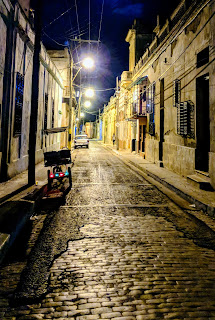
Written by Sophia Bass and Izzy Valdés. Translated below by Izzy Valdés. The majority of international travelers may not know about the lesser traveled destinations in Cuba. There is a special village right in the very heart of this island that is worth discovering. Camagüey, formerly called “Santa Maria Del Puerto del Principe” is one of the first seven villages founded by the Spaniards in Cuba and also one of those places you should not miss when traveling to this Caribbean Island. Founded in 1514 in the northern coast of the territory, the town became an urban center for the sugar and cattle industry. Known for its beautiful colonial architecture, you can find endless labyrinthian alleys, numerous squares, and ornate cathedrals, as the city is known for its Catholic history. Exploring a city like Camagüey is quite a challenge. When it seems you have reached the end of a street, it merges with the beginning of another, totally unexpected - right before your eyes you have ...

Muraleando: A Community Project in Havana, Cuba (Traducido al español)

Image
Written by Sophia Bass, translated below by Izzy Valdés The first time I traveled to Havana, I immediately noticed a variety of artistic expression throughout the city. From local art markets and galleries to murals, I wanted to learn the story behind Cuba's innovative art scene. I quickly learned of the Muraleando Art Project founded by Manuel Diaz Baldrich and Ernesto Quirch Paz in 2003. Founder of Soltura Cuba Travel, Ian Sergeant, assisted in funding the creation of the project through the not-for-profit organization, Cuba AyUUda.  Situated on the outskirts of Havana, the project has transformed an area of rubble and destruction into a thriving art collective. The goal of Muraleando is to bring children off the streets of Havana and inspire them to contribute to a community project. In a country where nothing is disposable and everything is useful from telephone wires, iron, to old typewriters, artists in Cuba sought an opportunity to utilize these materials and create s...

An Unforgettable Journey

Image
Written by Allison Viaja  Dear Momma, I have run the Malecon at sunrise, talked politics with people from around the globe in front of kitchy Trump art nuevo at Fabrica de Arte , whose line stretches 1,000 people long, but which the gift of a VIP card allowed me to bypass. I've biked 40km through fishing villages along the northern coast with doctors from Belgium, and free climbed the magotes of Viñales . I've sat 3rd row center at the Cuban National Ballet and been reduced to tears. I've been paraded around cobblestone streets in a horse drawn carriage while men yelled, "You're beautiful!," and "I love you!" up to me like adoring subjects. I've refreshed my salsa skills on crumbling rooftops to sunsets that last longer than my legs do, and to the music of everyday life. I've scuba'd the Bahia de Cochinos and played dominos in the streets of Havana, smoking cigars with men 10x my age and been schooled and taught a thing or two r...

Lunch in Playa Larga, Cuba

Image
Written by Sophia Bass Cuban cuisine typically combines seafood or meat, African inspired flavors and spices, and influences from the Spanish. Throughout my time in Cuba, I was in awe of the colorful meals I ate outside of Havana. My favorite lunch was in Playa Larga, Cuba when my partner and I decided to escape the city and stay in a small beach village. As we walked up and down the beach, my partner and I came across a local cafe that served fish (pescado) accompanied by local seasonal vegetables, rice, and avocado. I enjoyed the simplicity of this dish as the Cuban people were utilizing local resources in Playa Larga. The fish was fresh, the vegetables were locally grown, and the rice was perfectly cooked. I had some of the best seafood that I've ever had in my life in Cuba. The abundance of fresh fish, shrimp, squid, and lobster are often main menu items for travelers. Whether you're getting a quick bite on the beach or dining at restaurant Vista Mar in Havana, you ...

Walking the Art Market in Havana

Image
Written by Sophia Bass  My first trip to Old Havana I was pleasantly surprised by the amount of art vendors, musicians, and colorful fruit stands that colored the streets. I could have spent days wandering around the Cathedral Square that is a central destinations for travelers around the world. After a long day of walking in the heat, I stumbled across the San José Artisans' Market.  Contained in a large warehouse to protect travelers and locals from the sun, arts and crafts vendors set up stands from dawn to dusk to sell paintings, ceramics, clothing, instruments, cigars, and crafts. I can recall men hustling to sell cigars and handmade wooden boxes. My partner bought a beautiful carved wooden box with the Cuban flag carved on the front and two cigars for my father. As my eyes wandered to the paintings and ceramics, I purchased two brightly colored plates painted with blues, greens, oranges, and yellows to decorate my home. As Old Havana is blend of Afro-Spanish c...

The Story Behind Malanga

Image
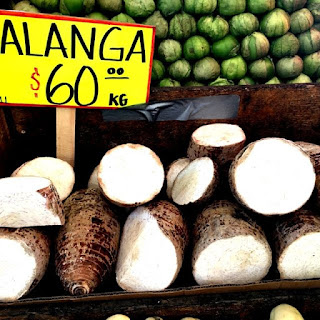
Written by Sophia Bass One of the first foods I tried in Old Havana, Cuba was a fried starchy appetizer dipped in honey. I had no idea what it was, but I learned it was called malanga. Popular throughout different regions in Cuba, malanga has an unique flavor unlike anything I've ever tried in the United States. It is often confused with taro as it has a similar taste and texture. When shredded and deep fried, it makes a delicious dish. While traveling throughout Cuba, I learned that malanga is native to the tropical central and northern parts of South America. First discovered by Spanish explorers, it was first domesticated in Central America and brought to the Dominican Republic, Haiti and Cuba and other regions of West Africa. Malanga can grow in environments that are moist such as flooded areas or marsh areas that receive a high amount of annual rainfall. In Cuba, malanga is available in food markets and some produce shops. I noticed that it was a popular item in touris...

Cuba and the Cameraman

Image
Written by Sophia Bass (traducido al español) Translated below by Izzy. “Cuba and the Cameraman,” has been widely talked about in the last week. Alpert, a filmmaker and journalist, has been capturing Cuba’s revolution and shifting society for five decades. He developed the film by utilizing portable technology and became more sophisticated as the film progressed. Using 15 types of cameras, he began the filming in 1972. This documentary is basically a museum of the entire evolution of electronic image-gathering,” says Alpert. As the film initially was filmed in black and white, it transitioned into color over a period of time. Alpert explains that he and his crew had difficulty filming at times because the government was suspicious of their activity. Alpert used a Sony color Portapak system that was so heavy in weight they had to transport it around. This attracted Fidel’s attention and led to successful documentation of the regime. This began a relationship that would conti...

The People Who Read to Cuban-Cigar Factory Workers

Written by Sophia Bass The Economist article provides insight into the lives of Cuba’s cigar-factory workers. Lectores have been reading at cigar factories since 1865, when Nicolas Azcarate, a leader of a movement for political reform, proposed that education should be instilled in the minds of factory workers. Cigar workers began listening to texts such as “The Count of Monte Cristo,” as they were stuck in the monotony of making cigars. These texts helped factory workers to take their minds off of tedious labor while also providing workers an education. Many believe that the influence of the texts on cigar workers contributed to Cuba’s independence from Spain. Today, nearly 200 Lectores are still in Cuba. While Cuba’s merchandise exports fell by 33% in 2016, Cigars continue to be one of the leading export industries as they rose by 5% to $445m. UNESCO is considering to designate la lectura as a form of “cultural heritage” to help keep it going throughout Cuba. “This is the only job...

Cuba's Car Scene in 2017

Image
Me in a vintage Chevy in Old Havana  Written by Sophia Bass For decades, Cuba has been home to 1950’s American classic vintage cars. As Cuba has had restrictions on new car imports under the Castro regime, the Caribbean nation has preserved classic cars while incorporating them into their daily culture. In a country where the average Cuban makes $20 a month, a new car would not be a realistic goal for most Cubans. If you visit Cuba, you will notice a wide array of cars and colors throughout Havana, Trinidad, Santiago de Cuba, and all throughout the countryside. An estimated 60,000 pre-1959 American cars are still driving the Cuban streets. An easing of the U.S. embargo could have dramatic impacts on car-scene throughout Cuba. Journalist, Jonathon Harper, traveled to Cuba in recent years and noticed that the majority of cars in Cuba fit in about five categories. “Original American classics, non-originiae American classics, Russian cars and trucks, newer Chinese/Korean/Japanese v...