Posts

Showing posts with the label Havana

The History of Salsa Music and Dance (traducido al español)

Image
Written by Sophia Bass, translated below by Izzy Valdés. I've always wanted to trace the origins of Salsa music. When I was traveling through Havana in 2017, I learned that Salsa is one of the most dynamic and important musical phenomena of the 1900's . Salsa combines Afro-Cuban dance, Spanish guitar, and complex rhythms that have become internationally acclaimed in cities such as New York City to Barcelona, Spain. While New York actually created the term "Salsa," the United States did not create the dance. Historically, Cubans gave birth to the origins of what is referred to as Salsa. The term became popular to refer to the variety of music from Latin American countries including Mambo, Rhumba, Bomba, Cumbia, Charanga, and many other forms of dance. The most famous musicians of the 1950's were Tito Puente , called the King of Mambo, and Celia Cruz, known as the Queen of Salsa. To trace the roots of Salsa music we can look to West Africa where slave trade thrive...

The Forbidden Shore: A Documentary about Cuban Music (Traducido al español)

Image
Written by Sophia Bass, translated below by Izzy Valdés. Cuba is known for its diverse music scene that combines European, African, and  Caribbean sounds. While you may be familiar with Cuban band, Buena Vista Social Club, the majority of the international world has not been exposed to Cuba's wide array of musicians and artists that play regularly on the streets of Old Havana.  The documentary,  The Forbidden Shore ,  showcases over 40 performances and interviews by Cuba's top artists. This film highlights how little the global world knows about Cuba and Latin America. Director Ron Chapman wanted the international community to know about the diversity of Cuban music. Chapman explains that he was in awe when he traveled to Cuba for the first time because he was unaware of the musical diversity on the Caribbean island. Artistic Director, Diana Vargas states, "We wanted to show a snapshot of the work that is being produced in Cuba today." As many people wan...

Muraleando: A Community Project in Havana, Cuba (Traducido al español)

Image
Written by Sophia Bass, translated below by Izzy Valdés The first time I traveled to Havana, I immediately noticed a variety of artistic expression throughout the city. From local art markets and galleries to murals, I wanted to learn the story behind Cuba's innovative art scene. I quickly learned of the Muraleando Art Project founded by Manuel Diaz Baldrich and Ernesto Quirch Paz in 2003. Founder of Soltura Cuba Travel, Ian Sergeant, assisted in funding the creation of the project through the not-for-profit organization, Cuba AyUUda.  Situated on the outskirts of Havana, the project has transformed an area of rubble and destruction into a thriving art collective. The goal of Muraleando is to bring children off the streets of Havana and inspire them to contribute to a community project. In a country where nothing is disposable and everything is useful from telephone wires, iron, to old typewriters, artists in Cuba sought an opportunity to utilize these materials and create s...

An Unforgettable Journey

Image
Written by Allison Viaja  Dear Momma, I have run the Malecon at sunrise, talked politics with people from around the globe in front of kitchy Trump art nuevo at Fabrica de Arte , whose line stretches 1,000 people long, but which the gift of a VIP card allowed me to bypass. I've biked 40km through fishing villages along the northern coast with doctors from Belgium, and free climbed the magotes of Viñales . I've sat 3rd row center at the Cuban National Ballet and been reduced to tears. I've been paraded around cobblestone streets in a horse drawn carriage while men yelled, "You're beautiful!," and "I love you!" up to me like adoring subjects. I've refreshed my salsa skills on crumbling rooftops to sunsets that last longer than my legs do, and to the music of everyday life. I've scuba'd the Bahia de Cochinos and played dominos in the streets of Havana, smoking cigars with men 10x my age and been schooled and taught a thing or two r...

Where to Dine in Havana

Image
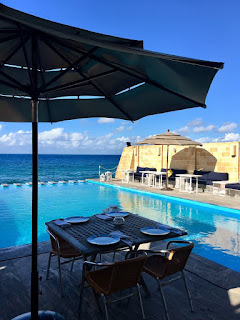
Written by Sophia Bass Havana is blossoming into a culinary scene in 2018. With new restaurants located in Vedado and Old Havana, restaurants are featuring local Cuban recipes combined with European inspired dishes. Ever since President Obama opened the doors between Cuba and the United States in 2016, chefs have been traveling between Havana and the United States introducing modern cuisine to Cuba. After dining at various restaurants and cafes in Havana, I wanted to recommend a few of my favorite spots. NAO Bar Paladar This cafe is perfect if you want to cool off in the shade while sightseeing, listen to local Cuban music, and have an appetizer or cocktail. Offering Caribbean, Latin, Cuban, and vegetarian options, NAO's food is diverse in its use of ingredients. My favorite dish was the cerdo (pork) with black beans and rice. NAO is located at the end of Obispo Street just near the malecón with a fantastic view of the water. Vista Mar  If you're a seafood lov...

Vedado--A Less Traveled Neighborhood in Havana (traducido al español)

Image
Written by Sophia Bass, translated below by Izzy Valdés. My first trip to Havana I stayed in Vedado, a modern part of the city that was developed in the first half of the 20th century. Vedado is interesting because it is known as a more affluent part of the city home to businesses and elegant neighborhoods. While staying in Vedado with a family, our homestay mother, Lucy, explained that Vedado was transformed by American investors and individuals benefiting from Cuba's sugar trade. My favorite night in Vedado was when my partner and I decided to wander the streets and take in views of mansions, Cuban architecture, and government-sponsored cultural centers. One of the most famous landmarks in Vedado is the Hotel Riviera which was built in 1957. You can feel the aftermath of the Cuban Revolution simply by walking around this area of Havana. Vedado's rich history is not the only reason to wander the streets. This residential neighborhood is filled with public parks where...

The Story Behind Malanga

Image
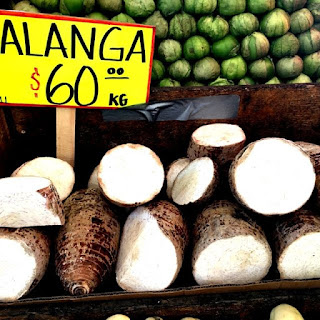
Written by Sophia Bass One of the first foods I tried in Old Havana, Cuba was a fried starchy appetizer dipped in honey. I had no idea what it was, but I learned it was called malanga. Popular throughout different regions in Cuba, malanga has an unique flavor unlike anything I've ever tried in the United States. It is often confused with taro as it has a similar taste and texture. When shredded and deep fried, it makes a delicious dish. While traveling throughout Cuba, I learned that malanga is native to the tropical central and northern parts of South America. First discovered by Spanish explorers, it was first domesticated in Central America and brought to the Dominican Republic, Haiti and Cuba and other regions of West Africa. Malanga can grow in environments that are moist such as flooded areas or marsh areas that receive a high amount of annual rainfall. In Cuba, malanga is available in food markets and some produce shops. I noticed that it was a popular item in touris...

Cuba and the Cameraman

Image
Written by Sophia Bass (traducido al español) Translated below by Izzy. “Cuba and the Cameraman,” has been widely talked about in the last week. Alpert, a filmmaker and journalist, has been capturing Cuba’s revolution and shifting society for five decades. He developed the film by utilizing portable technology and became more sophisticated as the film progressed. Using 15 types of cameras, he began the filming in 1972. This documentary is basically a museum of the entire evolution of electronic image-gathering,” says Alpert. As the film initially was filmed in black and white, it transitioned into color over a period of time. Alpert explains that he and his crew had difficulty filming at times because the government was suspicious of their activity. Alpert used a Sony color Portapak system that was so heavy in weight they had to transport it around. This attracted Fidel’s attention and led to successful documentation of the regime. This began a relationship that would conti...

Cuba's Car Scene in 2017

Image
Me in a vintage Chevy in Old Havana  Written by Sophia Bass For decades, Cuba has been home to 1950’s American classic vintage cars. As Cuba has had restrictions on new car imports under the Castro regime, the Caribbean nation has preserved classic cars while incorporating them into their daily culture. In a country where the average Cuban makes $20 a month, a new car would not be a realistic goal for most Cubans. If you visit Cuba, you will notice a wide array of cars and colors throughout Havana, Trinidad, Santiago de Cuba, and all throughout the countryside. An estimated 60,000 pre-1959 American cars are still driving the Cuban streets. An easing of the U.S. embargo could have dramatic impacts on car-scene throughout Cuba. Journalist, Jonathon Harper, traveled to Cuba in recent years and noticed that the majority of cars in Cuba fit in about five categories. “Original American classics, non-originiae American classics, Russian cars and trucks, newer Chinese/Korean/Japanese v...

The 10 Most Beautiful Spots in Cuba

Image
For travelers interested in going to Cuba, here are 10 beautiful places you can’t miss when visiting this historic Caribbean Island. Old Havana, also known as Habana Vieja, is an UNESCO World Heritage Site, preserving some of Cuba’s richest history. You will not be disappointed roaming Havana’s cobblestone streets, while being serenaded by street musicians of all kinds. For many, Havana is the highlight of Cuba. Baracoa, founded in 1511, is the oldest city in the Caribbean nation. With incredible views of the sea, this town is known for its breathtaking views and hike on Yunque, a mountain famous for its flat top at 589 meters high. Trinidad, a well preserved colonial town in Cuba is also a UNESCO World Heritage Site. Known for it’s impressive Spanish-colonial buildings, you can enjoy Playa Ancon, a beach on the southern coast, and enjoy a meal on the rooftop of a historic restaurant in the evening. Playa Paraiso, a paradise beach, is breathtaking. Located on Caya Largo del S...

Post-Hurricane Irma

Written by Ian Sergeant  Our thoughts are with our Cuban friends this week, after Hurricane Irma ravaged the northern coast of the country, and had a devastating effect on the entire country. As of this writing, the entire electrical infrastructure has been severely damaged, which means that Cubans are also without internet access. The Civil Defense System worked all night trying to keep people safe. He says they were heroic in their endeavors. Many trees are down, buildings completely destroyed, and 5th Avenue (where most of the embassies are) is completely under water. Much rebuilding will need to be done as the water subsides, and we will lend a hand in any way that we can - at the very least by continuing to bring our business to support the people of Cuba. We received word from our recently licensed attorney friend Amalia regarding Cojimar, Hemingway's favorite place to fish and to get away from fame-chasers. Much of it was destroyed in the hurricane. Amalia lives next to Coji...

Contemporary Cuban Artists You Should Know (traducido al español)

Image
Written by Sophia Bass, translated below by Izzy Valdés. Cuba's culture has historically been known for its contemporary art that emerged out of the 1980's. Today, many contemporary Cuban artists are traveling to international museums and art galleries receiving praise for their work. With new relations in the United States many believe that Cuban art will become widespread. For decades, Cuban art has been marginalized due to political and societal reasons. Article, 10 Contemporary Cuban Artists You Should Know , presents 10 contemporary Cuban artists that play a critical role in portraying Cuba's history and national identity. Sculpting and installation artist, Armando Marino, is one of the most popular Cuban contemporary artists. He is known for portraying issues of gender, race, sex, human trafficking, and freedom in contemporary society. Marino has been exhibiting across the world in Europe, the USA, and Africa since 1990. Cuban painter, Alicia Leal, is a h...

Cuba's Food Scene is Exploding

Image
Written by Sophia Bass Cuba has not been historically known for its food scene, but this has rapidly changed in the last decade. Havana’s food scene has become widespread and is attracting travelers from all regions of the world. With nearly 2,000 private restaurants in Havana, visitors in Cuba can enjoy a variety of cuisine from Italian to Vietnamese. When Fidel Castro’s brother, Raul, took control of the government, there began a shift in the restaurant industry. He increased the amount of chairs from 12 to 50 in restaurants and issued new licenses. This started the transformation of Havana’s food scene. The re-establishment of diplomatic relations with Cuba in during Obama’s presidency in 2015 additionally influenced the restaurant scene in Cuba. Today, travelers who visit Cuba can enjoy a filet mignon, shrimp risotto, or a grilled seafood platter with lobster tail. Cubans who travel to Europe, Florida, and Mexico are bringing back foreign flavors and incorporating them into...