Posts

A Lesser Known City in Cuba: Camagüey ( traducido al español)
Image
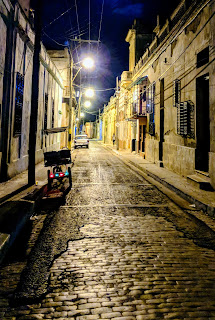
Written by Sophia Bass and Izzy Valdés. Translated below by Izzy Valdés. The majority of international travelers may not know about the lesser traveled destinations in Cuba. There is a special village right in the very heart of this island that is worth discovering. Camagüey, formerly called “Santa Maria Del Puerto del Principe” is one of the first seven villages founded by the Spaniards in Cuba and also one of those places you should not miss when traveling to this Caribbean Island. Founded in 1514 in the northern coast of the territory, the town became an urban center for the sugar and cattle industry. Known for its beautiful colonial architecture, you can find endless labyrinthian alleys, numerous squares, and ornate cathedrals, as the city is known for its Catholic history. Exploring a city like Camagüey is quite a challenge. When it seems you have reached the end of a street, it merges with the beginning of another, totally unexpected - right before your eyes you have ...

Muraleando: A Community Project in Havana, Cuba (Traducido al español)

Image
Written by Sophia Bass, translated below by Izzy Valdés The first time I traveled to Havana, I immediately noticed a variety of artistic expression throughout the city. From local art markets and galleries to murals, I wanted to learn the story behind Cuba's innovative art scene. I quickly learned of the Muraleando Art Project founded by Manuel Diaz Baldrich and Ernesto Quirch Paz in 2003. Founder of Soltura Cuba Travel, Ian Sergeant, assisted in funding the creation of the project through the not-for-profit organization, Cuba AyUUda.  Situated on the outskirts of Havana, the project has transformed an area of rubble and destruction into a thriving art collective. The goal of Muraleando is to bring children off the streets of Havana and inspire them to contribute to a community project. In a country where nothing is disposable and everything is useful from telephone wires, iron, to old typewriters, artists in Cuba sought an opportunity to utilize these materials and create s...

An Unforgettable Journey

Image
Written by Allison Viaja  Dear Momma, I have run the Malecon at sunrise, talked politics with people from around the globe in front of kitchy Trump art nuevo at Fabrica de Arte , whose line stretches 1,000 people long, but which the gift of a VIP card allowed me to bypass. I've biked 40km through fishing villages along the northern coast with doctors from Belgium, and free climbed the magotes of Viñales . I've sat 3rd row center at the Cuban National Ballet and been reduced to tears. I've been paraded around cobblestone streets in a horse drawn carriage while men yelled, "You're beautiful!," and "I love you!" up to me like adoring subjects. I've refreshed my salsa skills on crumbling rooftops to sunsets that last longer than my legs do, and to the music of everyday life. I've scuba'd the Bahia de Cochinos and played dominos in the streets of Havana, smoking cigars with men 10x my age and been schooled and taught a thing or two r...

Recent Election in Cuba Makes History (traducido al español).

Image
Written by Sophia Bass, translated below by Izzy Valdés. If you're traveling to Cuba in 2018, you may want to learn about the recent election that occurred on March 11th. Cuba's election  will open a final chapter of the Castro era. This is the first time in nearly 60 years that a member of the Castro family will no longer be in charge of office. As President Raul Castro will be stepping down in April of 2018, this election marks a critical time in history for Cuba as a nation. President Raul Castro will continue as the head of the Communist Party after stepping down from office. "They're the most important elections of recent years, because we are going to vote for new people who will govern from then on," day-care center guardian Ramon Perez told AFP news agency in  Minute by minute: General elections in Cuba (II) . Thanks to special polling stations, every Cuban eligible to vote was able to participate in the voting process wherever they were in the n...

Where to Dine in Havana

Image
Written by Sophia Bass Havana is blossoming into a culinary scene in 2018. With new restaurants located in Vedado and Old Havana, restaurants are featuring local Cuban recipes combined with European inspired dishes. Ever since President Obama opened the doors between Cuba and the United States in 2016, chefs have been traveling between Havana and the United States introducing modern cuisine to Cuba. After dining at various restaurants and cafes in Havana, I wanted to recommend a few of my favorite spots. NAO Bar Paladar This cafe is perfect if you want to cool off in the shade while sightseeing, listen to local Cuban music, and have an appetizer or cocktail. Offering Caribbean, Latin, Cuban, and vegetarian options, NAO's food is diverse in its use of ingredients. My favorite dish was the cerdo (pork) with black beans and rice. NAO is located at the end of Obispo Street just near the malecón with a fantastic view of the water. Vista Mar  If you're a seafood lov...

Vedado--A Less Traveled Neighborhood in Havana (traducido al español)

Image
Written by Sophia Bass, translated below by Izzy Valdés. My first trip to Havana I stayed in Vedado, a modern part of the city that was developed in the first half of the 20th century. Vedado is interesting because it is known as a more affluent part of the city home to businesses and elegant neighborhoods. While staying in Vedado with a family, our homestay mother, Lucy, explained that Vedado was transformed by American investors and individuals benefiting from Cuba's sugar trade. My favorite night in Vedado was when my partner and I decided to wander the streets and take in views of mansions, Cuban architecture, and government-sponsored cultural centers. One of the most famous landmarks in Vedado is the Hotel Riviera which was built in 1957. You can feel the aftermath of the Cuban Revolution simply by walking around this area of Havana. Vedado's rich history is not the only reason to wander the streets. This residential neighborhood is filled with public parks where...

Lunch in Playa Larga, Cuba

Image
Written by Sophia Bass Cuban cuisine typically combines seafood or meat, African inspired flavors and spices, and influences from the Spanish. Throughout my time in Cuba, I was in awe of the colorful meals I ate outside of Havana. My favorite lunch was in Playa Larga, Cuba when my partner and I decided to escape the city and stay in a small beach village. As we walked up and down the beach, my partner and I came across a local cafe that served fish (pescado) accompanied by local seasonal vegetables, rice, and avocado. I enjoyed the simplicity of this dish as the Cuban people were utilizing local resources in Playa Larga. The fish was fresh, the vegetables were locally grown, and the rice was perfectly cooked. I had some of the best seafood that I've ever had in my life in Cuba. The abundance of fresh fish, shrimp, squid, and lobster are often main menu items for travelers. Whether you're getting a quick bite on the beach or dining at restaurant Vista Mar in Havana, you ...

Walking the Art Market in Havana

Image
Written by Sophia Bass  My first trip to Old Havana I was pleasantly surprised by the amount of art vendors, musicians, and colorful fruit stands that colored the streets. I could have spent days wandering around the Cathedral Square that is a central destinations for travelers around the world. After a long day of walking in the heat, I stumbled across the San José Artisans' Market.  Contained in a large warehouse to protect travelers and locals from the sun, arts and crafts vendors set up stands from dawn to dusk to sell paintings, ceramics, clothing, instruments, cigars, and crafts. I can recall men hustling to sell cigars and handmade wooden boxes. My partner bought a beautiful carved wooden box with the Cuban flag carved on the front and two cigars for my father. As my eyes wandered to the paintings and ceramics, I purchased two brightly colored plates painted with blues, greens, oranges, and yellows to decorate my home. As Old Havana is blend of Afro-Spanish c...

My Favorite Cuban Instrument

Image
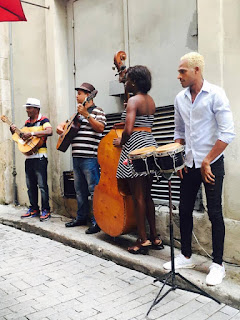
Written by Sophia Bass When walking through the streets of Old Havana, you may notice a variety of instruments being played by Cuban street musicians. Guitar, bongos, upright bass, and the clave are just a few of the many instruments utilized by Cuban musicians. As a songwriter and musician, I was most familiar with the clave as I grew up playing the Cuban instrument in my home. Claves are one of the most useful instruments for composition in Cuban music. They are comprised of two wooden sticks that are cylindrical in shape. You play the clave by striking them against each other. Originating in the 16th century, the clave was invented by musician Fernando Ortiz. I learned that the clave has historical significance as it was first instrument used to accompany the songs of Hispanic and African dock workers in Havana. When I was in Havana in 2017, a local musician in Vedado explained that the clave is used to track time signatures, stabilize harmony, and to perform precise patterns....

The Story Behind Malanga

Image
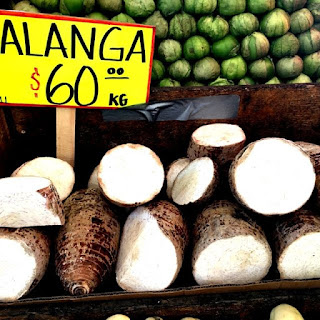
Written by Sophia Bass One of the first foods I tried in Old Havana, Cuba was a fried starchy appetizer dipped in honey. I had no idea what it was, but I learned it was called malanga. Popular throughout different regions in Cuba, malanga has an unique flavor unlike anything I've ever tried in the United States. It is often confused with taro as it has a similar taste and texture. When shredded and deep fried, it makes a delicious dish. While traveling throughout Cuba, I learned that malanga is native to the tropical central and northern parts of South America. First discovered by Spanish explorers, it was first domesticated in Central America and brought to the Dominican Republic, Haiti and Cuba and other regions of West Africa. Malanga can grow in environments that are moist such as flooded areas or marsh areas that receive a high amount of annual rainfall. In Cuba, malanga is available in food markets and some produce shops. I noticed that it was a popular item in touris...

A First Impression of Old Havana

Image
Written by Sophia Bass My entire life, I was told that Old Havana was known as a music mecca where musicians of all regions of Cuba come to play traditional Cuban music, Spanish serenades, with influences of African and European sounds. When I arrived to Havana in July of 2017, everything I had imagined about Cuba became a reality. The smell of Cuban cigars in alleyways, the sounds of a guitar and a clave in synchronicity, and the smell of pork being cooked over a fire. I was in heaven. Old Havana is a magical part of the city that still remains untouched by much of outside world. I was captivated by the architecture, old neoclassical Spanish style architecture, and the quaint European Cafe’s that offered Cafe Cubano, Cuba’s signature coffee drink. After sipping on delicious rich Cuban coffee, I stumbled across a live Cuban four piece band that played Buena Vista Social Club classics such as Chan Chanand Dos Gardenias. Rhythms were in sync and their voices harmonized beauti...

Snorkeling in Cuba

Image
January 18, 2018 Written by Sophia Bass Divers, scientists, marine-biologists and snorkelers like myself travel to Cuba to explore it’s vast marine ecosystem, home to magnificent coral reefs. Many snorkeling spots are accessible from the shore and contain a diverse array of marine life. Jardines de la Reina, about fifty miles south from the main island, was declared a Marine Natural Park in 1996. It is often known as the “Galapagos of the Caribbean.” Atlantic Blue Tang, Rock Beauty, French Angelfish, Sergeant Major, and Stoplight Parrotfish are just a few of the many brilliant colored fish that are among Cuba’s coral reefs. The image below showcases a Spotlight Parrotfish, commonly spotted around Cuba’s coral reefs. Calenta Buena is a popular protected cove with marine life and underwater rock landscapes. This is an ideal spot for beginners who want to stay close to shore. Located at the entrance of the Bay of Pigs, this excursion is in close proximity to Playa Giron and...

The History of the Cuban Sandwich

Image
Written by Sophia Bass I lived in Florida for nearly 5 years and was introduced to the Cubano sandwich in 2008. Since, it has been one of favorite sandwiches of all time. Cheese, ham, roasted pork, pickles, mustard, caramelized onions that melt in your mouth on toasted bread… I had never had such a delicious sandwich. After traveling around the US, I have noticed the Cubano to be popular among foodies like myself from Portland, Oregon to Miami, Florida. While it’s called the “Cuban” sandwich after immigrants who settled in Ybor City, Tampa who influenced the sandwich, the ingredients highlight the flavors of southern Italian and German communities who also migrated there. Mustard was a condiment that was favored by the Germans, while salami was added by the Italians, giving it exquisite flavor and taste. It’s important to note that Salami is not favored in Miami, but mainly to those in Tampa and other restaurants that prefer the Italian style. The Cuban sandwich has becom...

Escambray Mountains

Image
Written by Sophia Bass When thinking of Cuba, breathtaking beaches, elaborate Afro-Cuban dancing, and Spanish music usually come to mind. Folks who have not been to Cuba don’t usually think of it being known for it’s gorgeous mountainous region. When I traveled to Cuba last summer, I was in awe of the Escambray Mountains that begin before entering the old Spanish colonial town of Trinidad . The countryside of the valley that lies at the foot of the Escrambray Mountains is breathtaking. Guava, orange, and lemon trees grow throughout the region, colorfully painting the grassy area with pungent colors. Cuban farmers live scattered throughout the valley growing coffee in the region. I learned that Cuba is known for it’s arabica coffee beans, currently popular among the global coffee industry, so it’s a great destination if you’re a coffee lover. I remember we stopped on the side of the road to acquire some mangos during our taxi ride to Trinidad. We were surrounded by the lush ...

Why I Traveled to Cuba ( traducido al español)

Image
Written by Sophia Bass, translated below by Izzy Valdés. After the revolution in the 1950s, Cuba became somewhat of a mystery to the outside world. As someone who studied in Florida and lived in Ecuador during graduate school, I desired to travel to Spanish speaking countries where I could practice my knowledge of the language and immerse myself in the culture. Cuba had always attracted my attention. While living in St. Petersburg, Floridasa  for four years, I was accustomed to Cuban food, cerdo (pork), arroz (rice), and frijoles (beans) for lunch. My favorite restaurant in town served the most delicious Cubano and coffee. The aromas of the food and friendliness of the people continued to spike my interest in traveling to Cuba in the near future. I knew that understanding Cuba in 2017 would require seeing it through the eyes of the younger generation. Architects, dancers, musicians, and artists are paving the way for a more expressive and individualistic Cuba for the f...