Posts

Art and Fashion in Old Havana

Image
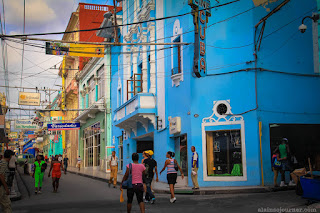
Written by Sophia Bass Fashion and art trends are becoming more widespread throughout Cuba. When President Obama opened the doors to Cuba in 2016, floodgates of Americans began traveling to Cuba  bringing clothing styles from New York, L.A., and Miami into Havana. If you walk around the Malecon, this is evident as men, women, and children are wearing sportswear and accessory brands from international clothing companies. When I was in Havana this summer, I asked several individuals about the shifting culture around fashion and art. Many Cubans expressed that graphic design is becoming more popular. Artists are wanting to incorporate their designs into clothing. Women throughout Havana are finding ways to intertwine their local art into products, such as handbags, jewelry, shirts, and hats. When walking around Old Havana on Calle Obispo, I noticed a small artisan market tucked between two old Spanish style buildings. Calle Obispo is known for its buzzing nightlife, music, a...

Cuba and the Cameraman

Image
Written by Sophia Bass (traducido al español) Translated below by Izzy. “Cuba and the Cameraman,” has been widely talked about in the last week. Alpert, a filmmaker and journalist, has been capturing Cuba’s revolution and shifting society for five decades. He developed the film by utilizing portable technology and became more sophisticated as the film progressed. Using 15 types of cameras, he began the filming in 1972. This documentary is basically a museum of the entire evolution of electronic image-gathering,” says Alpert. As the film initially was filmed in black and white, it transitioned into color over a period of time. Alpert explains that he and his crew had difficulty filming at times because the government was suspicious of their activity. Alpert used a Sony color Portapak system that was so heavy in weight they had to transport it around. This attracted Fidel’s attention and led to successful documentation of the regime. This began a relationship that would conti...

A Memorable Meal in Cuba

Image
Written by Sophia Bass If you’re a seafood lover, you will be pleasantly surprised by the amount of delicious seafood Cuba has to offer. Lobster, fish, shrimp, scallops….seafood was endless on the Caribbean island. I was in awe of the complexity of flavors and spices that were incorporated into each dish which has inspired me to cook Cuban food in my home. There was one dish in particular that continues to resonate with me even months after returning to the U.S. After four nights in Havana, I decided to travel to Playa Larga which is located on the Southern part of Cuba. Playa Larga is close to a small town, known for fishing more than anything. A typical dinner for a local family consisted of pescado (fish) , camerones (shrimp), or chicken and pork with a side of rice and portion of vegetables. The first night, my boyfriend and I stayed in a beautiful local beach casa and were told that the best meal was three houses down from ours. A man at our hotel said we could get lobster f...

The People Who Read to Cuban-Cigar Factory Workers

Written by Sophia Bass The Economist article provides insight into the lives of Cuba’s cigar-factory workers. Lectores have been reading at cigar factories since 1865, when Nicolas Azcarate, a leader of a movement for political reform, proposed that education should be instilled in the minds of factory workers. Cigar workers began listening to texts such as “The Count of Monte Cristo,” as they were stuck in the monotony of making cigars. These texts helped factory workers to take their minds off of tedious labor while also providing workers an education. Many believe that the influence of the texts on cigar workers contributed to Cuba’s independence from Spain. Today, nearly 200 Lectores are still in Cuba. While Cuba’s merchandise exports fell by 33% in 2016, Cigars continue to be one of the leading export industries as they rose by 5% to $445m. UNESCO is considering to designate la lectura as a form of “cultural heritage” to help keep it going throughout Cuba. “This is the only job...

Cuban Art Outshines Politics

Image
Written by Sophia Bass In New York Times article, “Cuba Art Outshines Politics,” author Abby Ellin paints a picture of Cuba’s current political and cultural state. As politics among Cuban and American relations continue to shift between the Obama Administration and Trump Era, Cuba has become a fascinating destination for art, music, and culture.  This has become evident through museums around the United States and Havana. In the last year, the Bronx Museum, El Museuo Nacional de Bellas Artes, and Cuban Museum of Natural history all featured visual Cuban artists. In addition, the Walker Art Center in Minneapolis attributed to the rising interest in travel to Cuba during the Obama Administration. Iliana Cepero, professor of Latin American Art and Cuban Culture at New York University states, “Cuba was a cultural center in Latin America from the 50’s to 80’s.” As political tension between Cuban and American relations have been present, the Cuban people have been waiting for ...

A Historical Look at Cuba's Cuisine

Image
Written by Sophia Bass  Cuban cuisine has been influenced by Spanish, Aboriginal, African and Caribbean influences. Food sources mainly come from rivers, lakes, and the ocean which provide much of the culture’s protein sources. The landscape is known for rich agriculture, producing fruits, vegetables, and “casabe,” which is a grain used for bread-making. During the Fidel Castro days, Cubans were cut off from the world and were deprived from outside food sources. A typical diet for a Cuban would often be beans, rice, and chicken or fish. Today, Cuba has access to a broader spectrum of ingredients. Modern chefs are looking towards native edibles, old traditions, and foreign influences to help re-shape Cuban cuisine. Aboriginal influences continue to impact island dishes. Cassava, sweet potatoes, and pumpkins are just a few of the many food sources that are main staples on the island. As Cuban natives fished and hunted, everything that was found was consumed quickly be...

Buena Vista Social Club's: Adios Review

Image
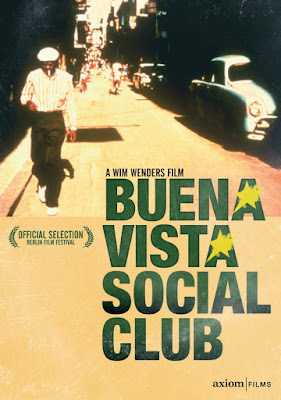
Written by Sophia Bass Buena Vista Social Club has been the international face of Cuban music for decades. An ensemble of Cuban musicians established in 1996 to revive the music of pre-revolutionary Cuba, Buena Vista developed an eternal legacy. With songs like Dos Gardenias and Chan Chan, this Cuban band has inspired generations of musicians all over the world. Documentary, Buena Vista Social Club: Adios, is being released in 2017, focusing on the Buena Vista Social Club’s phenomenon, a project that started out as an album recording tracks by aging Cuban musicians brought together by British impresario Nick Gold, produced by American musician Ry Cooder and directed by Juan de Marcos Gonzalez. Directed by Lucy Walker, this film focuses on biographical, political, and historical background of surviving band members while intertwining their interviews. Ruban Gonzalaez, Ibrahim Ferrer, and Omara Portunondo and many more are highlighted throughout the documentary. Walker wants to po...

Cuba's Car Scene in 2017

Image
Me in a vintage Chevy in Old Havana  Written by Sophia Bass For decades, Cuba has been home to 1950’s American classic vintage cars. As Cuba has had restrictions on new car imports under the Castro regime, the Caribbean nation has preserved classic cars while incorporating them into their daily culture. In a country where the average Cuban makes $20 a month, a new car would not be a realistic goal for most Cubans. If you visit Cuba, you will notice a wide array of cars and colors throughout Havana, Trinidad, Santiago de Cuba, and all throughout the countryside. An estimated 60,000 pre-1959 American cars are still driving the Cuban streets. An easing of the U.S. embargo could have dramatic impacts on car-scene throughout Cuba. Journalist, Jonathon Harper, traveled to Cuba in recent years and noticed that the majority of cars in Cuba fit in about five categories. “Original American classics, non-originiae American classics, Russian cars and trucks, newer Chinese/Korean/Japanese v...

In Cuba, Sourcing Style

Image
Written by Sophia Bass  Cuban culture is beginning to cultivate individualism after years of historical oppression. New York Times article, “In Cuba, Sourcing Style,” highlights individualism in a country that has been restrictive and regulated by communism for decades. Rose Cromwell, a photographer that has been traveling to Cuba for over 12 years, states that she senses Cuba is changing. She explains that in a country where clothing options are limited, cultivating a specific style can be challenging in Cuba. Relatives will bring back clothing from Mexico, Panama, or Miami and sell them from their homes. Some individuals have been found to source clothing from Brazil, wearing colorful attire in Old Havana or at music festivals. Men have been found to wear funky jewelry, even if they don’t have a lot of money, they enjoy wearing jewelry that feels expressive. Men are also finding fashion in hair styles, mustaches, and eyebrows. “You definitely see a lot of self-care, and barbersh...

Unseen Wonders: 10 of Cuba’s Best Natural Attractions

Image
Written by Sophia Bass Due to a rise in tourism in Cuba, travelers have been exploring Cuban countryside, taking hikes to waterfalls, snorkeling near remote beaches, and learning about Cuban ecology. Here’s a list of some of Cuba’s best natural attractions to visit for 2017-2018. Cayo Coco is a remote island destination. Locals call the sharp reef remnants “dog’s teeth,” and appropriate footwear is necessary for anyone who wants to hike beside the water. The island is known for bird watching, snorkel excursions, and canoe trips along mangroves. Zapata Biosphere Reserve contains one of the largest wetlands in the Caribbean. It boasts a UNESCO Biosphere Reserve, and is known for its citing of Cuban crocodiles. Guanahacabibes Peninsula Park lies within the Guanahacabibes Peninsula Biosphere, which was created in 1980. Known as one of the most remote places in Cuba, this park is home to deer, iguanas, and over 100 species of birds. Toppes de Collates is a protected area in the E...

Soltura Cuba Tours Continue Unaffected Despite Trump’s Policy

To Soltura Cuba Travelers, You may have heard the news regarding Trump’s policy on Cuba. We want to assure you of what the facts are as we know them on the ground. The announcement made by the State Department should have no effect on our trip. The US media has been confusing some of the facts. For example, one media source announced that Cuba was no longer issuing tourist visas to Americans, while the truth is that the US embassy is no longer issuing visas to Cubans who wish to visit the US. This is simply because there will not be enough embassy staff to process visas for Cubans. We want to assure you that there is no negative sentiment here toward US citizens. In fact the entire security force of Cuba has been fully cooperating with the US in the investigation into the sonic incidents that damaged a few embassy workers. Several highly regarded US scientists have concluded that it would have been impossible to have intentionally done this. It was likely faulty covert listening device...

The 10 Most Beautiful Spots in Cuba

Image
For travelers interested in going to Cuba, here are 10 beautiful places you can’t miss when visiting this historic Caribbean Island. Old Havana, also known as Habana Vieja, is an UNESCO World Heritage Site, preserving some of Cuba’s richest history. You will not be disappointed roaming Havana’s cobblestone streets, while being serenaded by street musicians of all kinds. For many, Havana is the highlight of Cuba. Baracoa, founded in 1511, is the oldest city in the Caribbean nation. With incredible views of the sea, this town is known for its breathtaking views and hike on Yunque, a mountain famous for its flat top at 589 meters high. Trinidad, a well preserved colonial town in Cuba is also a UNESCO World Heritage Site. Known for it’s impressive Spanish-colonial buildings, you can enjoy Playa Ancon, a beach on the southern coast, and enjoy a meal on the rooftop of a historic restaurant in the evening. Playa Paraiso, a paradise beach, is breathtaking. Located on Caya Largo del S...

Cuban Graffiti Artists Bring Social Critique to Havana's Walls

Image
Written by Sophia Bass A younger generation of Cuban artists are beginning to express newer social conditions through graffiti art in Havana. These works of art are touching on the shifting social and political views that are straying away from Communism. Some would say that newer demonstrations of Cuban art are symbolizing growing independence and materialism on an island that has been isolated for decades. Graffiti began emerging under President Raul Castro in the last few years. As the Caribbean nation has slowly relaxed some of it's communist views and become more influenced by international culture, there has been a rise in Cuban street art. Cuban artist, Yulier Rodriquez states, "I want to create a social conscience with my work, an awareness about what we are turning into." His alien like creatures with malnourished limbs and heads, touch on the state of the Cuban people. Although Cuba has began to transform in recent years, Rodriquez expresses concern that Cub...

Cuba Cleans Up After Hurricane Irma

Image
Written by Ian Sergeant More news from Cuba yesterday: Roger Martinez was able to access the news at his grandmother’s house. Electricity, water, and internet (essential for Cuban millennials) are all being restored neighborhood by neighborhood at a faster pace than was initially expected. Some of the damages: A few deaths have been reported, mostly from fallen debris from buildings a century or older in a couple of the more densely populated areas of the city that hadn’t been evacuated. A few neighborhoods on the outskirts of Havana set low and close to the water were prone to frequent flooding anyway, and sections were completely destroyed. Among the destroyed zones in the suburbs was Fuster’s decades old community project, Fusterlandia (this was a section of a Havana suburb with wild structures completely covered in mosaics in the style of Gaudi). The architect Fuster gave a live interview on TV. He said the only thing Irma didn’t tear down was a wall where a tiled mural of a ...

The Harvard Jazz Band Visits Cuba

Image
Written by Sophia Bass In late August, the Harvard Jazz Band traveled through Cuba, as part of a musical tour of the island. Under the guidance of Director Yosvany Terry, a native Cuban, they toured the historic museum and home of Tata Güines, one of Cuba's top percussionists, and viewed the National Folkloric Company of Cuba perform Afro-Cuban dance, percussion, and chanting. The purpose of the trip was to appreciate the diverse fabric of Cuban music, while also examining it's social and political importance. Marking the Harvard Band's first tour in 25 years, the trip highlighted the vibrancy of Cuba's complex music and rich history of preserving old traditions. "How they learn to internationalize rhythm is just fundamentally different than in the United States," said Ethan Kripke, a sophomore who plays drums. He expressed that the clave is fundamental to Cuban music, aiding percussion, singing, and dancing in Cuba. Students explored the streets of Hav...